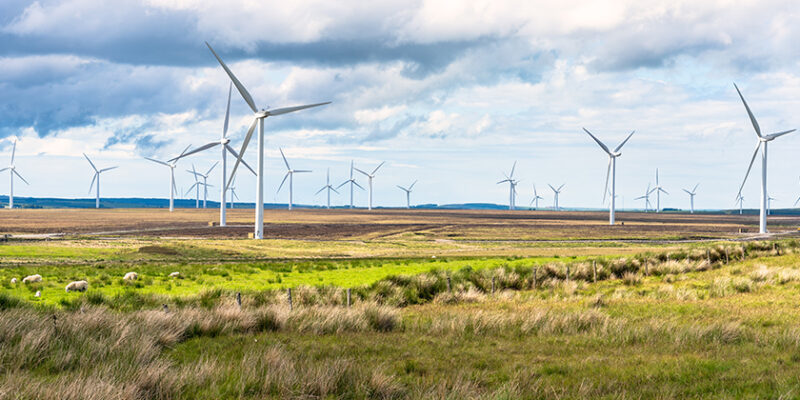
Renewable energy projects such as solar and wind farms can be a valuable way for landowners to diversify income and play a role in the transition to a lower-carbon economy. However, deciding whether a project is right for your land is rarely straightforward. These schemes can affect how your land is used, managed and valued for many years, so it is important to take time to review your position before progressing.
Whether a developer has already approached you or you are simply exploring the idea, here are four key questions to consider.
1. What are your objectives for a renewable energy project?
A good place to start is to be clear about what you want the project to achieve. For some landowners, the main attraction is a steady rental income, typically from leasing land to a developer. For others, it may form part of a longer-term investment strategy, or with the purpose of self-supplying energy for their own land.
Your goals will help shape the type of project that best suits your land. Different technologies come with different infrastructure requirements, land use demands and costs, so it is important to consider how the opportunity fits with your wider plans.
Consider:
- How will the project sit alongside your existing farming operations, and other activities such as sporting interests?
- Are there any knock-on effects for tenancies, borrowing arrangements or other third-party interests?
For example, a wind farm may have minimal impact on sheep farming once construction is complete. However, turbines may be less suitable where the land supports a farm shop, café or other visitor-facing business, where appearance and access are especially important. The key is to consider early on whether the project supports your wider aims or could make them more difficult to achieve.
2. How does this fit with your long-term plans?
It is important to view a renewable energy project as a long-term land use decision, rather than a short-term income opportunity. Many schemes run for 25 to 40 years or more, and during that time they can limit what else can be done with the land, and access routes.
Consider:
- Does the project fit with any future development plans, such as housing or other alternative uses?
- How might it affect the value or saleability of the land?
Succession planning is also key. A renewable energy project can influence not only the value of the land, but also how easily it can be divided or transferred in future.
3. How can you make the most of the opportunity for your business and family?
How you structure the project can make a big difference. It will affect how and when income is received, the tax position, the level of risk, and how involved you need to be in day-to-day management. You may choose to lease the land or take a more active role in development, and each option comes with different commercial and legal implications.
Consider:
- The developer’s track record, financial standing and funding arrangements and what level of control you may require in order to influence changes of tenant or shareholding control of the operator.
- Whether the proposed structure aligns with your wider business and family plans.
4. Is your land suitable?
Of course, the development ultimately hinges on whether the site is suitable. Renewable energy projects require land and access with the right physical and technical characteristics.
Solar projects need the correct orientation, minimal shading and good access. Wind projects rely on a strong, consistent wind resource and appropriate distance from homes and other sensitive locations. Battery storage and substations generally require less space but must be well located for a grid connection point.
Consider:
- Reviewing your title to ensure there are no restrictions which could prevent such projects, and that you have necessary rights (for example servitude rights of access for all necessary purposes to and from the nearest public road).
- Potential barriers to planning consent, including landscape and visual impact, cultural heritage, peatland, habitats, protected species, flood risk, and transport access.
- Environmental and community factors, such as biodiversity enhancement and wider natural capital opportunities.
- Grid connection availability, cost and timing, which can often determine whether a project is viable.
If a developer is leading the project, they may manage much of the planning, grid connection and regulatory process. Even so, it is important for landowners to understand the key risks and ensure responsibility for these matters is clearly set out in the legal agreements.
Once you have considered these questions, it is advisable to seek legal and tax advice at an early stage. Whichever route you choose, the structure, relationships and legal agreements involved can be complex. It is important to ensure they reflect your goals and protect your long-term interests, including requiring the developer to restore the land appropriately following the decommissioning of a project.
A trusted land agent can also help you assess whether the project has the potential to be viable, explore the best way to tackle negotiations, and address any concerns before you commit. Going into these discussions with a clear understanding of your objectives, long-term plans, financial priorities and site characteristics will put you in a strong position to make a confident decision. For many landowners, renewable energy projects can offer a valuable opportunity to generate long-term income while contributing to a more sustainable future.