


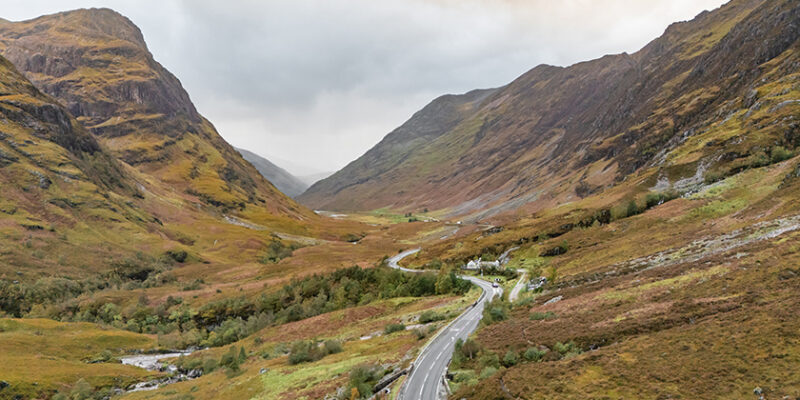
The Scottish Highlands rich in natural resources and home to dispersed rural communities, is uniquely positioned to lead a transformative energy transition. As the country strives toward its net-zero goals, a growing number of pilot projects across Scotland are demonstrating how developers and communities can work together to deliver sustainable, locally owned energy solutions. From solar farms and hydrogen microgrids to electric vehicle (EV) charging networks, these renewable energy initiatives are reshaping Scotland’s energy landscape and empowering Highland communities.
Community-Led Solar and Wind Projects
One of the most promising developments is the expansion of community solar and wind energy schemes. The Scottish Government’s Community Energy Generation Growth Fund, part of the CARES programme, has allocated over £5.5 million to nearly 50 community groups to install renewable energy systems such as solar panels and wind turbines. Notable examples include Arran Community Renewables, which is developing the Glenkiln Solar Farm, and Eigg Electric, working to decarbonise the Isle of Eigg by 2030.
Many community projects not only reduce carbon emissions but also generate income for local communities by selling excess energy back to the grid. The Huntly Development Trust, for instance, is exploring a hybrid model combining wind, solar, and green hydrogen to generate up to 20MW of clean energy.
Hydrogen-Powered Farming and Microgrid
Hydrogen is emerging as a key pillar in Scotland’s decarbonisation strategy. The HydroGlen project, led by the James Hutton Institute and Water to Water, is a pioneering initiative in Aberdeenshire that aims to create a green hydrogen-powered farming community at the Institute’s Glensaugh facility. Funded by the Scottish Government’s Just Transition Fund, HydroGlen integrates on-site renewable electricity generation with hydrogen production, storage, and EV charging infrastructure.
This model is designed to be scalable and replicable, offering rural communities a pathway to energy independence and resilience. By producing 100% of their electricity, heating, and transport fuel needs through renewables, communities like those at Glensaugh can reduce fuel poverty and improve food security. This also serves as an excellent example for Highland communities, demonstrating how local resources can be harnessed to create sustainable, self-sufficient energy systems tailored to remote areas.
EV Charging Networks and Transport Decarbonisation
As highlighted by Scotland’s Secretary for Transport, Infrastructure and Connectivity last year at an event hosted by Transport Scotland’s Zero Emission HGV team, transport remains a significant contributor to carbon emissions in the Highlands, where long distances and limited public transport options are part and parcel of daily life. The event reviewed progress on the HGV Decarbonisation Pathway for Scotland, published in March 2024, which identified the need for at least 63 electric HGV charging points along major routes (A9, A90, M74). To address this challenge, several projects are integrating EV charging infrastructure into broader renewable energy schemes. HydroGlen, for example, includes EV charging stations powered by on-site renewables, supporting the electrification of agricultural vehicles and reducing reliance on fossil fuels.
Scottish Power is also investing in Highland Communities as part of their community benefit programme. Their aim is to install over 12,000 public EV charging points by 2030, while companies like EasyGo are being awarded 20 year contracts to provide EV infrastructure in the north of Scotland. The EasyGo contract, valued at around £300 million, covers the Highland Council area along with Moray, Aberdeen City and Aberdeenshire and is backed by a £7 million investment from Transport Scotland.
Government and Developer Support
The Scottish Government has shown strong commitment to community-led energy, with over £9 million allocated in 2025 to support local renewable generation and energy efficiency improvements. This includes funding for capacity building, enabling communities to develop their own energy projects and participate in shared ownership models.
Developers are increasingly recognising the value of partnering with communities. Organisations like Green Cat Hydrogen Ltd and Storegga Hydrogen have received government funding for hydrogen projects in Highland areas such as Cromarty and Muir of Ord. These partnerships ensure that local communities benefit from infrastructure investments and job creation.
A Just Transition for the Highlands
As the energy transition accelerates, the concept of a “just transition” is central to Scotland’s approach to net-zero targets. This means ensuring that communities which have historically powered the economy—often through carbon-intensive industries such as those seen in the Cromarty Firth—are not left behind. Community ownership and benefit-sharing are key to this vision.
Research by Equitable Energy Research CIC highlights that community-owned energy projects generate up to 100 times more local wealth than corporate-owned counterparts. Projects like the Tiree Community Wind Turbine and Orkney’s council-owned wind farms are prime examples of how local control can deliver lasting social and economic value.
Inverness and Cromarty Green Freeport Collaboration
The Inverness and Cromarty Green Freeport represents a platform for collaboration between large scale renewable projects and local communities. Having already attracted major international investment, the freeport will create supply chains and technical expertise that community energy projects can draw from. This integration opens opportunities for shared resources, training, and funding, helping rural communities develop their own renewable initiatives while benefiting from the region’s growing green economy. In doing so, the Freeport can act as a bridge between national decarbonisation goals and local energy independence, ensuring that the transition delivers tangible benefits for Highland communities.
The Road Ahead for Highland Energy
Decarbonising Highland communities presents not only an environmental incentive but a compelling opportunity for developers. By partnering with local communities, developers can unlock new markets, access government funding, and build projects with strong local support and long-term viability. These collaborations foster trust, streamline planning processes, and ensure developments are tailored to local needs – whether through shared ownership models, integrated EV infrastructure, or renewable energy microgrids.
Scotland’s policy landscape actively encourages such partnerships, offering financial incentives and regulatory support for community-led and co-owned energy projects. Developers who engage early and meaningfully with communities stand to benefit from enhanced reputational value, reduced risk, and the chance to be part of a just transition that delivers real social impact.
The Highlands are not just a place to build energy infrastructure – they are a place to build lasting relationships, resilient projects, innovative solutions and a legacy of sustainable development that strengthens Scotland’s global reputation as a leader in green energy.